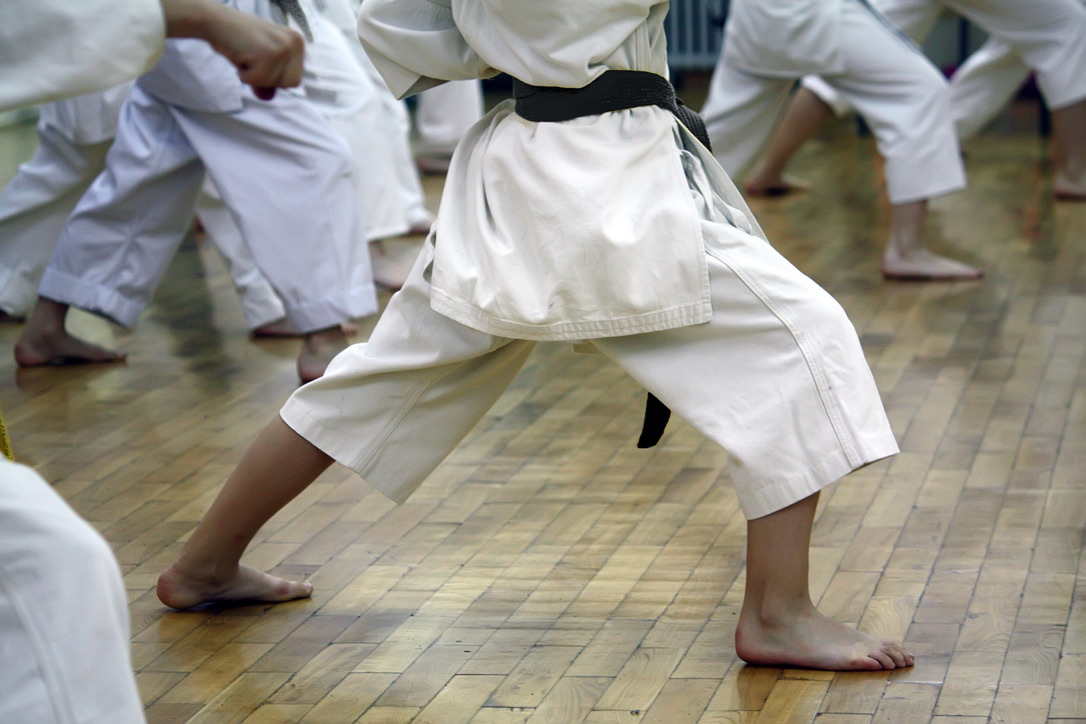
This Week’s Focus: Power Through Connection, Not Force
During recent gradings, we noticed two key issues:
1. Students lifting their heels too early
2. Trying to generate speed through effort rather than body connection
This week, we focused on movement, drive, and power creation — using the correct chain of motion to produce speed and velocity, while maintaining balance and control. With the intention of creating power through connection , not force.
The Importance of How We Start
In techniques like Oi Zuki, the way we initiate movement determines the outcome.
• Starting with the punch? You fall short.
• Starting with the leg? The step lands too early, stopping the body from reaching full speed.
Instead, the drive must begin from the hip and side of the body.
This releases the leg naturally, allowing it to move with the body’s weight — not ahead of it. The driving leg bends and drives
the body forward, keeping the heel grounded for maximum power.
Only at the final moment is the hand released. This makes the punch faster, harder to detect, and more powerful — because it now carries velocity: speed with intent.
The punch becomes the result of the movement, not the start of it.
How We Trained It

We used simple connection drills and phased movement exercises to teach the body how to load, release, and move in the correct sequence.
This type of training is essential for beginners building strong foundations — but just as important for senior grades. As your body evolves, so should your understanding of movement. To grow, you must go deeper into what you already know
✅ The Results
We saw improvements across all classes and grades. With continued focus on the finer details, progress will keep building power through connection , not force.
Osu,
Steve Sensei